



News Story
How Industrial Projects Can Spur Economic Growth
April 6, 2022

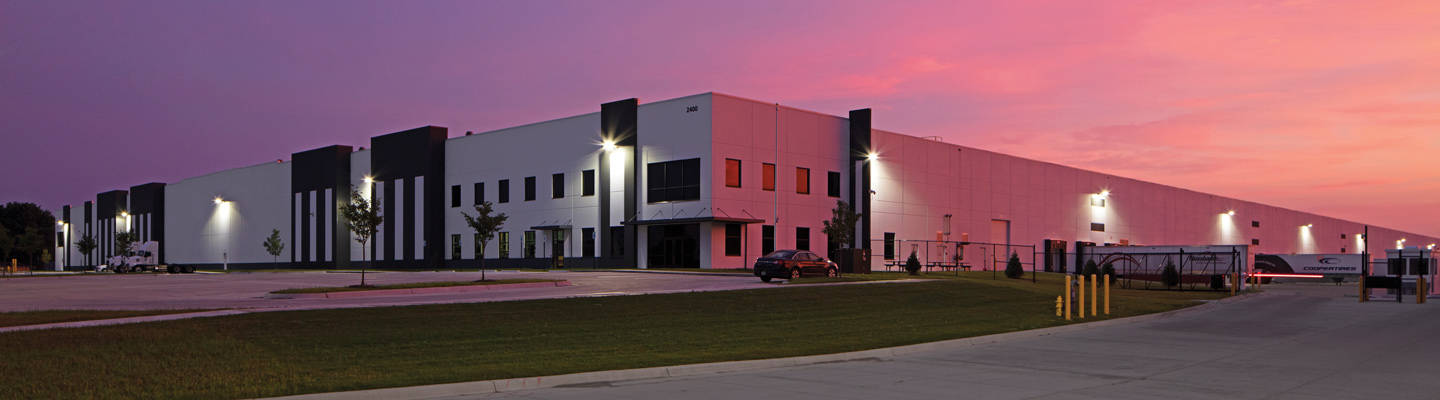
The 996,930-square-foot Cooper Tire and Rubber Co. warehouse and distribution center in Whiteland, Indiana. Mohr Capital broke ground on the project in June 2020, and it was ready for occupancy in January 2021. Studio13 courtesy of Mohr Capital
A large tire-storage facility in a small Indiana town offers lessons for developers on how to work with communities.
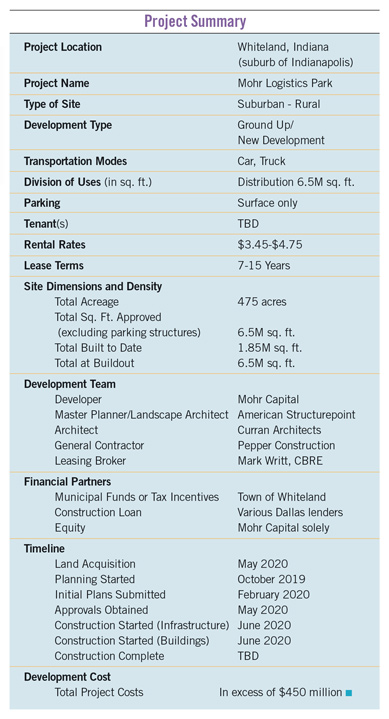
The new Cooper Tire and Rubber Co. warehouse and distribution center in Whiteland, Indiana, along with the 475-plus-acre Mohr Logistics Park, is bringing new employment opportunities and economic growth to this small town of 4,400 people 20 minutes south of Indianapolis. Dallas-based Mohr Capital focuses on the development of large-scale projects across the nation and has extensive experience working with municipalities and townships. Despite its familiarity working with town managers and city planners, as well as its understanding of the intricacies of comprehensive plans, bringing the Cooper Tire project and Mohr Logistics Park to fruition required creativity, patience and cooperation.Searching for the Perfect Parcel
Findlay, Ohio-based Cooper Tire and Rubber Co. is a long-term client of Mohr Capital. The firm built the tire manufacturer’s former 807,042-square-foot facility in Franklin, Indiana. At the time of construction 12 years ago, it was the largest LEED-certified building in the United States. Even though Mohr and Cooper Tire designed and developed the facility to be operational for several decades, the company outgrew the space. Additionally, changes in the supply chain market made operations at the facility challenging, especially as it related to trailer storage capacity. The existing site could not accommodate Cooper’s growth. As the lease expiration approached, Mohr began searching for a replacement property that better suited Cooper Tire’s long-term needs and could provide better economics. To meet Cooper Tire’s growth expectations and operational needs, it required a minimum of 60 acres to build a facility with more square footage and more trailer parking. Moreover, the company wanted to remain in the county or the immediate vicinity because of its existing workforce, which boasts a labor pool of 30,550 potential workers within a 30-minute commute. Cooper Tire’s site selection team, led by Mohr Capital, searched for two years to find the right location and available land for the new facility. The site Mohr identified was located in Whiteland, a small town of about 4,400 residents. It is situated five miles south of I-465 off I-65. The site of the new location is also close to I-70 — only 19 miles away — and other logistics hubs: 25 miles to Indianapolis International Airport’s FedEx hub and 102 miles to the UPS hub in Louisville, Kentucky. Additionally, the site is eight miles north of Cooper Tire’s previous facility in Franklin, Indiana, and is surrounded by industrial uses — two truck stops are nearby and an Amazon fulfillment facility is just across the road. Prior to construction, there were only two industrial facilities in Whiteland. Mohr Logistics Park, at full buildout, will contain more than 6 million square feet spread across eight to 10 buildings.Designing to Unique Building Requirements
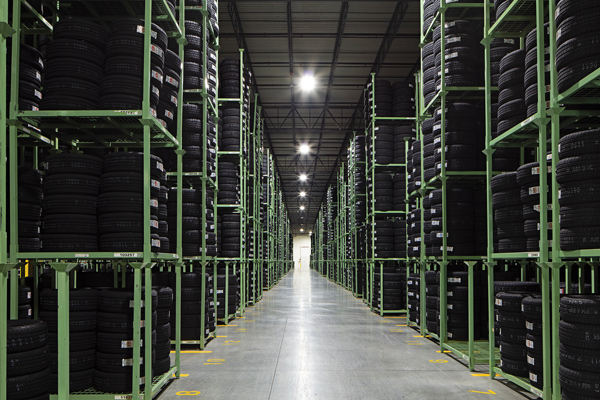
Facilities used for storing tires feature unique design and construction requirements. Rubber is potentially flammable, so these warehouses have special fire code requirements including specific sprinkler heads, interior fire walls and water supply requirements. Studio13 courtesy of Mohr Capital
Aggregating Hundreds of Acres
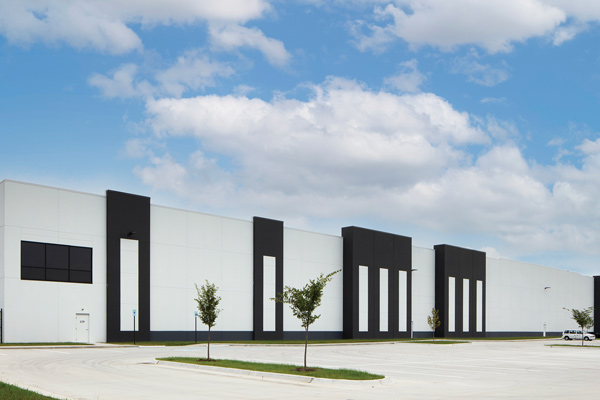
Mohr Capital invested $43 million in the Cooper Tire building. Cooper Tire spent $10 million on new portable steel modular racking systems and other equipment. Studio13 courtesy of Mohr Capital
Re-Imagining the Comprehensive Plan
Like most municipalities, the town of Whiteland had a comprehensive plan that outlined its future commercial and residential growth. However, that plan didn’t take into account the economic opportunities a substantial development like Mohr Logistics Park could bring to the area. After Mohr presented its vision for the master-planned industrial park and participated in several meetings to address resident questions, the town of Whiteland took several steps to accommodate the project. Specifically, it annexed 340 acres from unincorporated Johnson County and rezoned the land to light industrial. Originally, Whiteland zoned the land for agricultural and residential use. Several acres were owned by local farmers, and one was an apple orchard that was fallow and unproductive when Mohr moved to acquire it. Meanwhile, Mohr needed to relocate several long-term homeowners to accommodate Mohr Logistics Park. Mohr offered the landowners well above appraisal values and worked with the sellers to accommodate scheduling requirements for their relocation at no cost. While the U.S. Corps of Engineers identified only 2.97 acres as officially protected wetlands, Mohr plans to donate a large tract to the town of Whiteland for recreational use, walking trails and a park. This area is located in the wooded area behind a cluster of homes east of Cooper Tire’s building.Winning Over Reluctant Residents
 The Cooper Tire facility, and Mohr Logistics Park overall, could be seen as an example of a successful public-private partnership.
Mohr representatives attended upwards of 15 public hearings and meetings to get to know council members, community leaders and neighbors and share its vision of the industrial park.
Though the project generated some resistance from homeowners and residents who prized the surrounding farmland and opposed new development, Mohr worked hard to gain support from the town and its residents. Given the size of the project, the company knew community cooperation was critical, and it overcame resistance by listening to concerns and making several development accommodations.
Many residents and town council members expressed enthusiasm about Mohr’s vision to develop a master-planned industrial park rather than a series of one-off buildings, or a disparate and disjointed collection of warehouses. The company aims to create a cohesive and consistent look and feel that encompasses abundant landscaping, signage, building design, roadway improvements and building colors.
Mohr increased its budget for additional landscaping on this project, spending roughly 50% more than it usually does in order to create a park-like environment. It also invested in berming, extensive setbacks from residents and landscape buffering to shield views of the buildings and create separation from the industrial park and any residential uses in the area.
Additionally, Mohr took on roadway improvements, utilities, sewer upgrades and water distribution management. The company modified two sharp 90-degree turns on a critical access road, turning them into a softer “S” curve to accommodate vehicular traffic and tractor trailers. The company also expanded and resurfaced all roads within Mohr Logistics Park.
As part of the development, Mohr created a comprehensive drainage plan for the entire park. When the company rebuilt the access road described above, it took an extra step by adding drains into the resident’s yards across the street that tied into the larger overall drainage system of ditches and detention areas. The solution will help prevent flooding and oversaturation, thereby achieving “positive” drainage.
The Cooper Tire facility, and Mohr Logistics Park overall, could be seen as an example of a successful public-private partnership.
Mohr representatives attended upwards of 15 public hearings and meetings to get to know council members, community leaders and neighbors and share its vision of the industrial park.
Though the project generated some resistance from homeowners and residents who prized the surrounding farmland and opposed new development, Mohr worked hard to gain support from the town and its residents. Given the size of the project, the company knew community cooperation was critical, and it overcame resistance by listening to concerns and making several development accommodations.
Many residents and town council members expressed enthusiasm about Mohr’s vision to develop a master-planned industrial park rather than a series of one-off buildings, or a disparate and disjointed collection of warehouses. The company aims to create a cohesive and consistent look and feel that encompasses abundant landscaping, signage, building design, roadway improvements and building colors.
Mohr increased its budget for additional landscaping on this project, spending roughly 50% more than it usually does in order to create a park-like environment. It also invested in berming, extensive setbacks from residents and landscape buffering to shield views of the buildings and create separation from the industrial park and any residential uses in the area.
Additionally, Mohr took on roadway improvements, utilities, sewer upgrades and water distribution management. The company modified two sharp 90-degree turns on a critical access road, turning them into a softer “S” curve to accommodate vehicular traffic and tractor trailers. The company also expanded and resurfaced all roads within Mohr Logistics Park.
As part of the development, Mohr created a comprehensive drainage plan for the entire park. When the company rebuilt the access road described above, it took an extra step by adding drains into the resident’s yards across the street that tied into the larger overall drainage system of ditches and detention areas. The solution will help prevent flooding and oversaturation, thereby achieving “positive” drainage.